
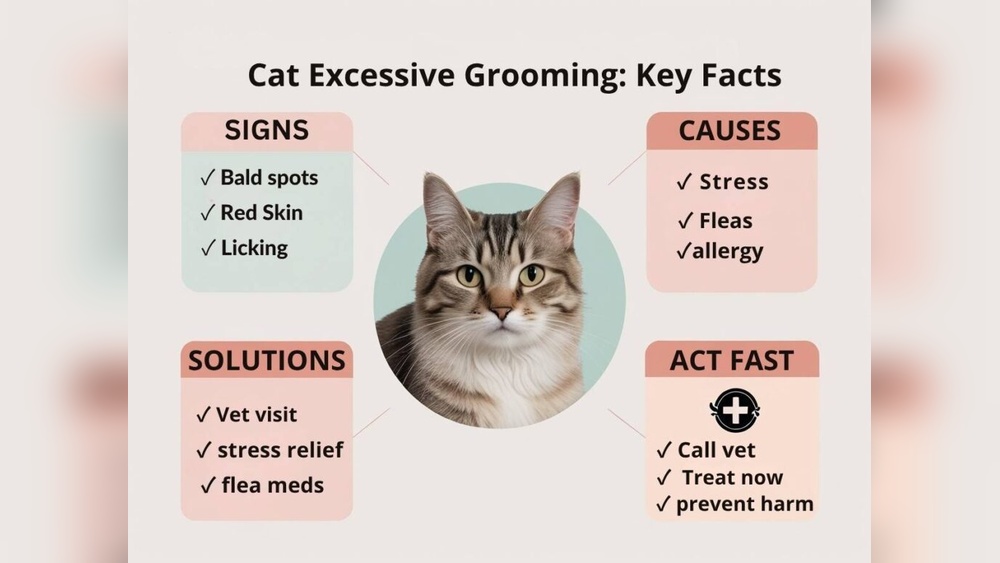
Have you noticed your cat spending more time licking and grooming than usual? You might be wondering, “Is my cat excessively grooming?”
This behavior can be more than just a quirky habit. It could be a sign that something is bothering your furry friend. Understanding why your cat grooms so much is key to keeping them happy and healthy. Keep reading to discover what excessive grooming means, what causes it, and how you can help your cat feel better.

Credit: www.wikihow.pet
Signs Of Excessive Grooming
Excessive grooming in cats can signal stress, allergies, or health issues. Early signs help catch problems before they get worse. Watch your cat closely for changes in grooming habits. Recognizing these signs can protect your cat’s skin and fur.
Bald Patches And Hair Loss
Notice spots where fur is missing or thin. Bald patches appear from constant licking or biting. These areas may look smooth or irritated. Hair loss often shows on the belly, legs, or neck. It suggests your cat grooms too much in one place.
Redness And Skin Irritation
Check your cat’s skin for redness or swelling. Irritated skin may feel warm or sore to the touch. Look for tiny scabs or crusts from scratching. Skin irritation means grooming is harming the skin’s surface. This needs attention to prevent infection or pain.
Licking And Biting Frequency
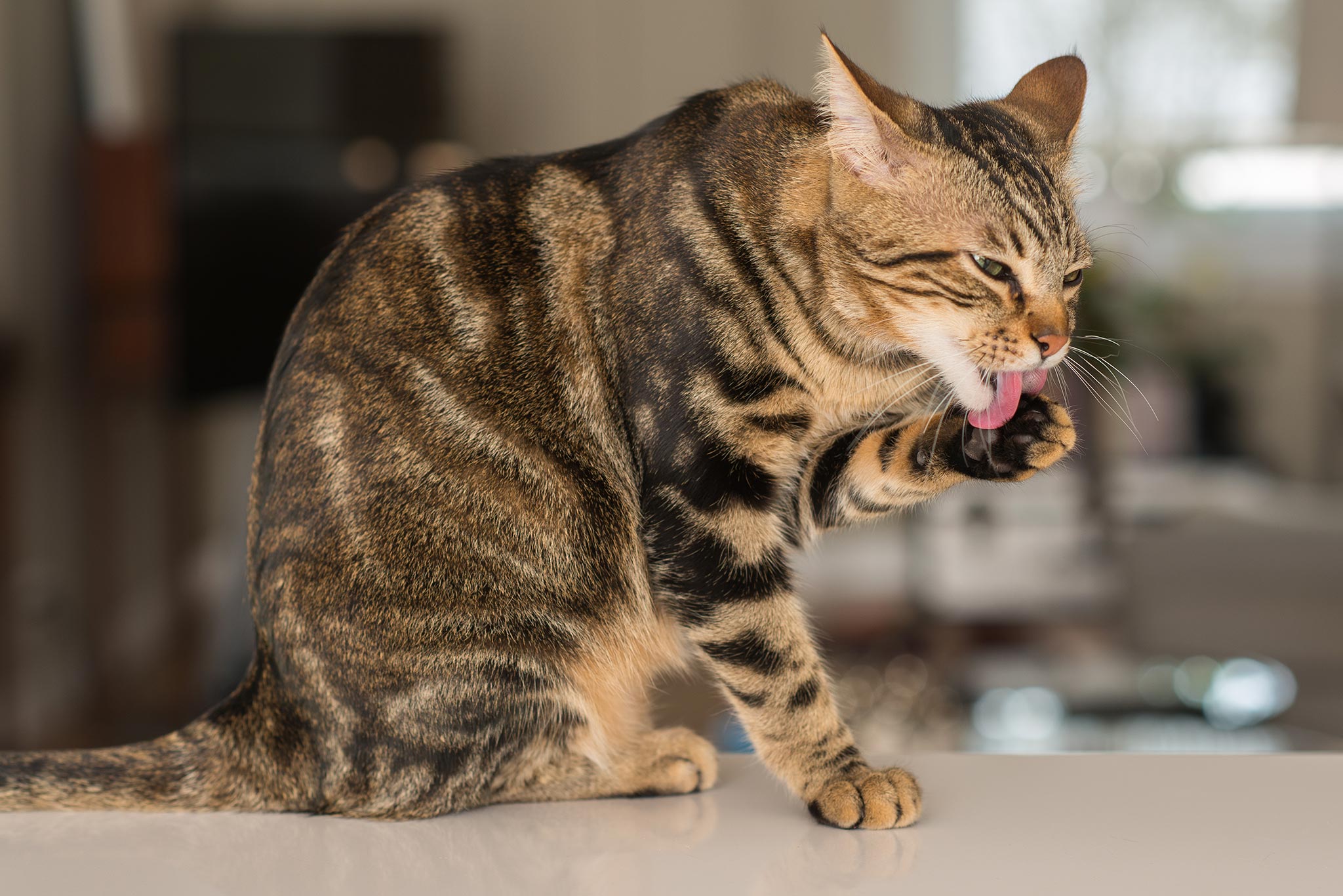
Watch how often your cat licks or bites itself. Excessive grooming means spending long times cleaning one spot. Your cat may seem restless or focused on grooming. Normal grooming is quick and gentle. Too much licking or biting can cause damage.
Behavioral Changes
Notice if your cat acts differently. It may hide, seem anxious, or lose interest in play. Excessive grooming can link to stress or discomfort. Changes in mood or habits often come with over-grooming. These signs show your cat needs care and comfort.
Common Causes
Excessive grooming in cats can signal different issues. Understanding the common causes helps you address the problem quickly. Cats groom to clean themselves, but too much grooming can harm their skin and fur.
Several factors can cause this behavior. Some relate to health problems, while others stem from the cat’s environment or feelings. Knowing the cause is the first step to helping your cat feel better.
Allergies And Skin Conditions
Allergies often cause itching and irritation. Cats may lick or scratch to ease the discomfort. Skin conditions like dermatitis or fungal infections also lead to excessive grooming. These problems make the skin sore and inflamed.
Stress And Anxiety
Stress can make cats groom too much. Changes in the home, new pets, or loud noises cause anxiety. Grooming becomes a way to calm themselves. This behavior may look like licking or biting the same spot repeatedly.
Parasites And Infections
Fleas, mites, and ticks cause itching and irritation. Cats react by grooming excessively. Bacterial or yeast infections can develop from constant licking. These infections worsen the problem and need veterinary care.
Pain Or Discomfort
Pain from injuries or arthritis might lead to more grooming. Cats focus on painful areas, licking to soothe discomfort. This behavior can cause hair loss or skin damage over time.
Environmental Factors
Dry air or harsh shampoos irritate the skin. Poor diet or lack of water affects coat health. Cats may groom more to relieve dryness or itchiness. Keeping their environment comfortable reduces this risk.
Health Risks Of Over-grooming
Excessive grooming in cats can cause serious health problems. Cats clean themselves, but too much grooming may harm their skin and body. Understanding these health risks helps protect your cat’s well-being.
Skin Damage And Infections
Too much grooming can hurt a cat’s skin. It may cause redness, sores, and hair loss. Open wounds invite bacteria, leading to infections. Infections cause pain and need medical care. Watch your cat’s skin for any changes.
Hairballs And Digestive Issues
Excessive grooming means more hair ingestion. Cats swallow loose fur, forming hairballs. Large hairballs can block the stomach or intestines. This blockage causes vomiting, loss of appetite, or constipation. Hairballs can lead to serious digestive problems.
Behavioral Impact
Over-grooming often shows stress or anxiety. Cats may feel nervous or uncomfortable. This behavior might worsen if ignored. Stress affects their mood and daily activities. Identifying triggers is important to help your cat feel safe.
Home Remedies And Care
Excessive grooming in cats can cause discomfort and skin problems. Home care helps calm your cat and reduce over-grooming. Small changes in daily life can make a big difference. Safe remedies at home support your cat’s health and comfort.
Improving Environment
Create a calm space for your cat to relax. Reduce loud noises and sudden movements. Provide cozy resting spots away from busy areas. Use soft blankets and warm beds to comfort your cat. Regular playtime helps release energy and stress.
Diet Adjustments
Feed a balanced diet with essential nutrients for skin health. Include foods rich in omega-3 and omega-6 fatty acids. These help reduce inflammation and improve coat quality. Avoid sudden changes in food to prevent stomach upset. Offer fresh water to keep your cat hydrated.
Using Soothing Products
Use gentle shampoos made for cats to soothe irritated skin. Apply natural sprays with chamomile or aloe vera for calming effects. Avoid harsh chemicals or human products that can harm your cat. Check with your vet before trying new topical treatments.
Distraction Techniques
Give your cat toys to focus on instead of grooming. Use puzzle feeders to keep their mind busy. Spend time playing and bonding every day. Offer safe scratching posts to reduce stress. Change toys regularly to keep your cat interested.
When To See A Vet
Excessive grooming in cats can signal a problem. Knowing when to see a vet helps protect your cat’s health. Early action can prevent pain and more serious issues.
Persistent Symptoms
Watch for grooming that lasts more than a few days. If your cat keeps licking or biting the same spot, it needs attention. Persistent grooming can cause skin damage and pain.
Signs Of Infection
Look for redness, swelling, or open sores on your cat’s skin. Pus or unusual smells also suggest infection. These signs require prompt veterinary care to avoid worsening.
Behavioral Concerns
Notice if grooming comes with changes in behavior. Your cat may hide, become aggressive, or lose appetite. These changes often mean your cat feels stressed or unwell.
Credit: brownvethospital.com
Veterinary Treatments
Veterinary treatments play a key role in managing excessive grooming in cats. A vet can find the root cause and suggest the best care plan. Treatment may involve medicine, therapy, or parasite control. Each cat’s needs are different, so a personalized approach is important.
Medications And Topicals
Vets often prescribe medications to reduce itching and inflammation. These can include antihistamines or steroids. Topical creams and sprays help soothe irritated skin. Medicines calm allergies or infections causing the grooming. Always follow the vet’s instructions carefully for best results.
Behavioral Therapy
Behavioral therapy helps cats cope with stress or anxiety. A vet may suggest changes in the cat’s environment. Toys, playtime, and attention reduce boredom and nervousness. Training can redirect grooming habits to healthier activities. This therapy supports long-term improvement in grooming behavior.
Parasite Control
Parasites like fleas or mites cause itching and excessive grooming. Vets recommend treatments to remove these pests quickly. Flea collars, spot-on treatments, and oral medications are common options. Keeping the cat’s living area clean also helps prevent parasites. Effective parasite control stops the cycle of itching and over-grooming.
:strip_icc()/how-to-stop-cat-over-grooming-554052-02-292560d5fa1542458556eff312f669d7.jpg)
Credit: www.thesprucepets.com
Frequently Asked Questions
What Causes Excessive Grooming In Cats?
Excessive grooming in cats can be caused by stress, allergies, parasites, or skin infections. It may also indicate pain or behavioral issues. Identifying the root cause helps in providing proper treatment and relief.
How To Tell If My Cat Grooms Too Much?
Look for bald patches, red or irritated skin, and frequent licking or biting. Excessive grooming often leads to hair loss and skin damage, signaling a potential health or emotional problem.
Can Anxiety Make A Cat Groom Excessively?
Yes, anxiety can trigger excessive grooming as a coping mechanism. Cats may over-groom to self-soothe during stressful situations or changes in their environment.
When Should I See A Vet For Grooming Issues?
Visit a vet if your cat has bald spots, wounds, or persistent skin irritation. Early diagnosis prevents complications and ensures effective treatment.
Conclusion
Excessive grooming can signal stress or health problems in cats. Watch your cat’s behavior closely and note any changes. Providing a calm, safe environment helps reduce anxiety. If grooming persists or worsens, consult your veterinarian. Early care can prevent serious issues.
Remember, a happy cat grooms just the right amount. Stay attentive and act quickly to keep your pet healthy. Your cat depends on you for comfort and care.