
Have you noticed your cat licking or biting its fur more than usual? Excessive cat grooming can be more than just a quirky habit—it might signal something important about your pet’s health or happiness.
Understanding why your cat grooms too much helps you keep them comfortable and safe. You’ll discover the common reasons behind this behavior and what steps you can take to help your furry friend feel better. Keep reading to learn how to spot the signs and take action before it becomes a bigger problem.
Causes Of Excessive Grooming
Excessive grooming in cats happens for many reasons. It is not always a sign of good hygiene. Sometimes, cats groom too much because something is wrong. Understanding the causes helps to find the right solution. Below are common causes of excessive grooming in cats.
Medical Issues
Health problems can make cats lick or scratch a lot. Skin infections or wounds cause discomfort. Pain from arthritis or injuries may lead to more grooming. Sometimes, hormonal imbalances affect grooming habits. A visit to the vet can identify these problems.
Allergies And Parasites
Allergies often cause itchy skin in cats. Food, pollen, or dust can trigger this reaction. Fleas and mites are common parasites that cause itching. Cats try to relieve this by licking or scratching. Checking for allergies and parasites is important.
Stress And Anxiety
Cats can feel stressed by changes in their environment. Moving to a new home or loud noises can cause anxiety. Grooming helps them calm down but can become excessive. Stress-related grooming often leads to bald patches. Reducing stress helps lower this behavior.
Boredom And Environmental Factors
Lack of stimulation can make cats groom too much. Bored cats use grooming as a way to pass time. Small living spaces or no toys increase grooming out of boredom. Providing playtime and interaction reduces excessive grooming. A busy environment keeps cats healthy and happy.
Credit: doctorgroomer.com
Signs To Watch For
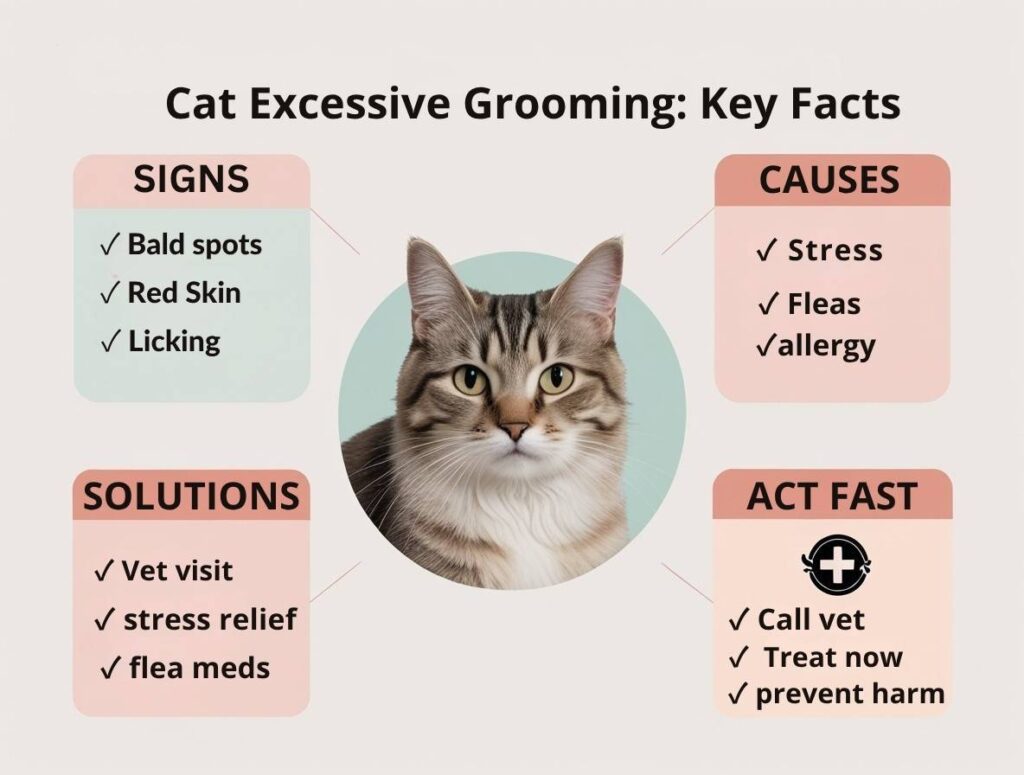
Excessive cat grooming can harm your pet’s health and comfort. Watching for early signs helps catch problems fast. Observe your cat’s coat, skin, and habits closely. Changes often hint at stress, allergies, or health issues.
Bald Patches And Skin Irritation
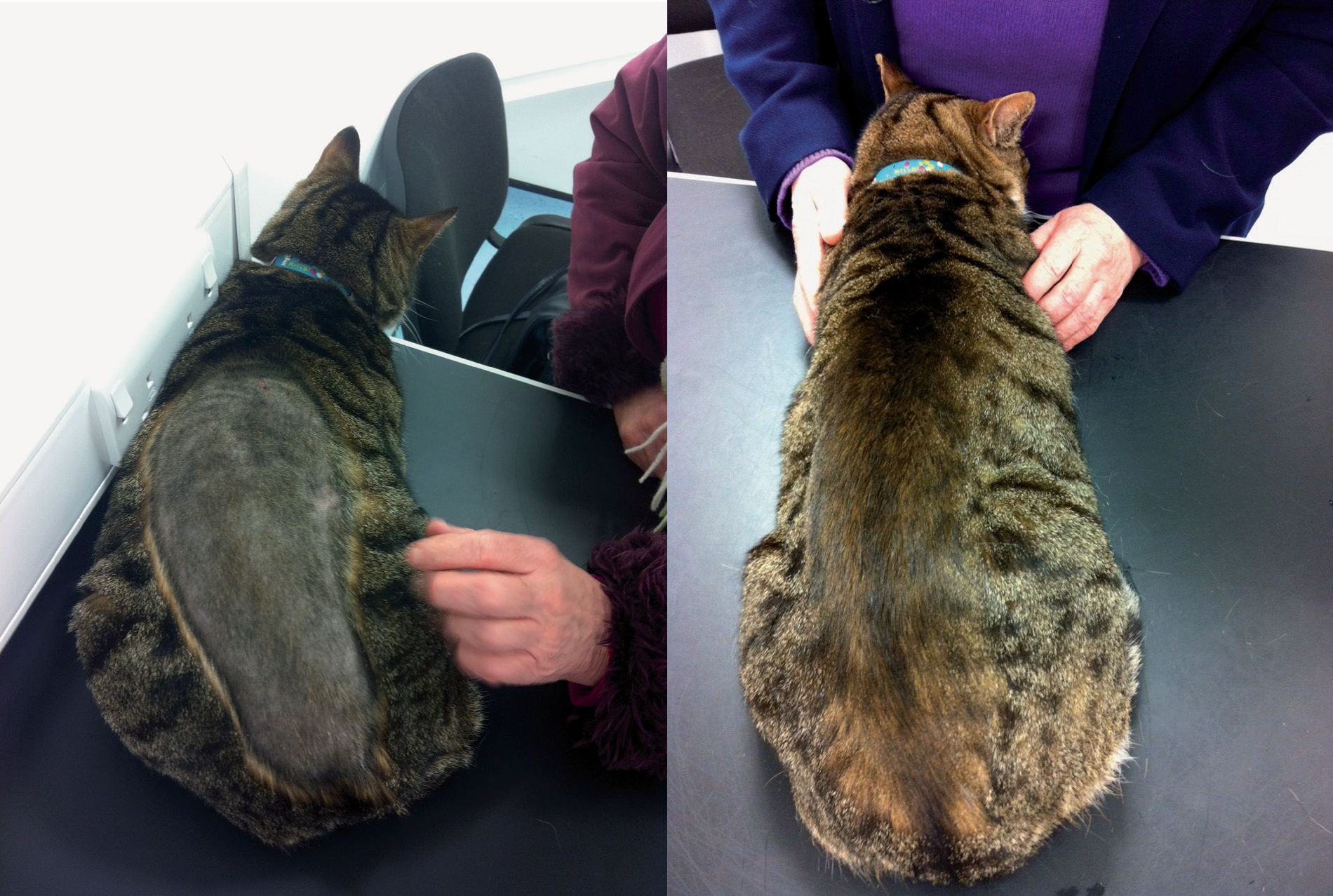
Look for bald spots on your cat’s fur. These patches show where your cat licks or bites too much. Red, swollen, or scaly skin around these areas means irritation. Such signs suggest your cat is uncomfortable or stressed.
Changes In Grooming Frequency
Note if your cat suddenly grooms more than usual. Grooming is normal, but too much is not. Excessive licking or biting can cause damage to skin and fur. Pay attention to long grooming sessions or repeated licking in one spot.
Behavioral Changes
Your cat’s behavior can reveal grooming problems. Watch for restlessness or hiding more than usual. Cats may act anxious or irritable when stressed. These signs often link to excessive grooming caused by discomfort.
Physical Symptoms
Check for wounds, scabs, or bleeding on your cat’s skin. Hair loss combined with these symptoms needs prompt attention. Excessive grooming can cause physical harm beyond fur loss. Early care prevents infections and more serious issues.
Solutions And Treatments
Excessive cat grooming can cause serious skin problems and discomfort. It needs prompt attention and care. Various solutions and treatments help manage this issue. Each approach targets different causes and symptoms.
Veterinary Care And Diagnosis
A vet checks your cat’s health first. They look for allergies, parasites, or infections. Accurate diagnosis guides the right treatment plan. Regular vet visits help catch problems early. Early care prevents worsening of skin damage.
Behavioral Therapy
Stress often triggers over-grooming in cats. Behavioral therapy reduces anxiety and boredom. Techniques include positive reinforcement and calm handling. Training your cat helps change harmful habits. Consistency and patience improve results.
Environmental Enrichment
Providing toys and climbing spaces keeps cats busy. New activities reduce stress and repetitive licking. Safe outdoor time or window views help too. A rich environment supports mental and physical health. Happy cats groom less out of stress.
Medications And Topical Treatments
Vets may prescribe medications for allergies or infections. Anti-inflammatory creams soothe irritated skin. Medications calm itching and reduce grooming urges. Follow the vet’s instructions carefully. Proper use speeds up healing and relief.
:strip_icc()/how-to-stop-cat-over-grooming-554052-02-292560d5fa1542458556eff312f669d7.jpg)
Credit: www.thesprucepets.com
Preventing Excessive Grooming
Preventing excessive grooming in cats helps keep them healthy and happy. This behavior can cause skin problems and stress. Taking steps early reduces the chance of serious issues. Simple habits make a big difference in your cat’s life.
Regular Health Checks
Regular vet visits catch health problems early. Skin infections, allergies, or parasites can cause grooming issues. Your vet can suggest treatments to stop discomfort. Early care prevents your cat from licking too much.
Reducing Stress Triggers
Stress often leads to excessive grooming in cats. Loud noises, changes in routine, or new pets cause anxiety. Create a calm space with quiet and safe spots. Keep routines steady to help your cat feel secure.
Maintaining A Stimulating Environment
Boredom can make cats groom too much. Toys, scratching posts, and playtime keep them busy. Mental and physical activities lower stress and reduce grooming. Rotate toys to keep your cat interested and active.
Proper Nutrition And Care
Good food supports healthy skin and fur. Nutrient-rich diets reduce itchiness and irritation. Fresh water and clean litter boxes improve your cat’s comfort. Proper care helps prevent grooming problems before they start.
Credit: academy.royalcanin.com
Frequently Asked Questions
What Causes Excessive Cat Grooming Behavior?
Excessive cat grooming often results from stress, anxiety, allergies, or skin infections. It can also be due to boredom or underlying medical issues. Identifying the cause helps provide appropriate treatment and prevent further discomfort for your cat.
How Can I Tell If My Cat Grooms Too Much?
Look for signs like bald patches, red or irritated skin, and frequent licking. Excessive grooming usually exceeds normal cleaning habits and may cause fur loss or sores. Monitoring your cat’s grooming routine helps detect problems early.
Is Excessive Grooming Harmful To Cats?
Yes, excessive grooming can harm cats by causing skin wounds, infections, and fur loss. It may lead to pain and discomfort. Addressing the root cause is essential to protect your cat’s health and well-being.
When Should I See A Vet For Grooming Issues?
Visit a vet if your cat has bald spots, skin irritation, or changes in behavior. Persistent excessive grooming may indicate underlying health or psychological problems needing professional care. Early intervention improves outcomes.
Conclusion
Excessive cat grooming can signal stress or health issues. Watch your cat’s behavior closely. Changes in grooming habits often mean discomfort or anxiety. Seek advice from a vet for proper care. Early action helps your cat stay happy and healthy.
Understanding this behavior improves your bond with your pet. Keep your cat comfortable and safe by noticing signs early. Caring for your cat means paying attention to all habits.