
Have you ever wondered what makes a long-furred cat truly long-haired, generation after generation? If you want to understand the secret behind a true-breeding long-furred cat, it all comes down to its genotype.
Knowing this genetic makeup not only satisfies your curiosity but can also help you predict your cat’s traits and plan future litters with confidence. Keep reading to discover the simple yet fascinating genetic code that defines these beautiful cats and why it matters to you as a cat lover or breeder.

Credit: www.chegg.com
True-breeding Cats
True-breeding cats are special in genetics. These cats have parents with the same traits. Their offspring show the same traits without change. This makes them important for studying heredity. True-breeding cats have a simple genetic makeup. It helps breeders predict traits in kittens. Long fur is one such trait often studied. The genotype of a true-breeding long-furred cat is consistent and clear.
Traits Passed To Offspring
True-breeding cats pass traits directly to their kittens. Their genes are stable and unchanging. A long-furred true-breeding cat will always have long-haired kittens. This happens because they carry two copies of the same gene. These genes control the physical trait of fur length. The offspring inherit these genes from both parents. This makes true-breeding cats reliable for producing specific traits.
Importance In Genetics
True-breeding cats help scientists understand how traits work. Their consistent traits show how genes pass through generations. They are key in genetic experiments and studies. This helps explain dominant and recessive gene patterns. Breeders use true-breeding cats to maintain or improve traits. They also help avoid unwanted genetic changes. True-breeding cats make genetic predictions more accurate and simple.

Credit: homework.study.com
Genotype Basics
The genotype of a cat shows its genetic makeup. It tells us which genes the cat has. These genes affect traits like fur length. True-breeding long-furred cats have specific genotypes.
Understanding genotype basics helps explain why certain traits pass down. It involves learning about genes, alleles, and how traits work.
Genes And Alleles
Genes are parts of DNA that control traits. Each gene has different versions called alleles. A cat inherits one allele from each parent. These alleles combine to form the cat’s genotype. For fur length, there are alleles for long fur and short fur.
Dominant Vs Recessive Traits
Some alleles are dominant, others are recessive. A dominant allele hides the effect of a recessive one. Long fur in cats is usually a recessive trait. This means a cat needs two copies of the long-fur allele to show long fur. True-breeding cats have two identical alleles for their trait.
Fur Length Genetics
Fur length in cats depends on their genes. These genes decide if a cat has long or short fur. Understanding these genes helps us know the cat’s true breed and traits.
True-breeding cats pass the same fur length trait to their kittens. This means their genes for fur length are consistent and predictable.
Long Fur Gene
The long fur gene is a recessive gene. This means a cat needs two copies of this gene to have long fur. Cats with one or no copies of this gene usually have short fur.
True-breeding long-furred cats have two long fur genes. Their kittens always inherit long fur because of this gene pair.
Short Fur Gene
The short fur gene is dominant over the long fur gene. Cats with one short fur gene will have short fur. They can still carry the long fur gene without showing it.
Cats with two short fur genes will always have short fur. They cannot produce long-furred kittens unless the other parent has the long fur gene.
Genotype Of Long-furred Cats
The genotype of long-furred cats shows the genetic makeup controlling their fur length. Genes come in pairs, one from each parent. The long fur trait depends on specific gene variants.
True-breeding long-furred cats have two copies of the gene for long fur. This means they will always pass the long fur gene to their kittens.
Homozygous Dominant Explanation
A homozygous dominant cat has two identical dominant alleles for long fur. This genotype is written as LL.
Cats with LL genotype always have long fur. They cannot produce kittens with short fur.
This genotype guarantees that offspring inherit long fur from this parent.
Heterozygous Possibilities
A heterozygous cat has one dominant allele and one recessive allele. This genotype is written as Ll.
These cats show long fur because the dominant gene hides the recessive one.
They can pass either the long fur or short fur gene to their kittens.
This means some offspring may have short fur if paired with another cat carrying short fur genes.
Breeding True-breeding Cats
Breeding true-breeding cats requires understanding their genetics. True-breeding means the cat will pass the same traits to its kittens. For long-furred cats, this means the gene for long fur is consistent. Breeders aim for predictability in offspring traits. This helps keep the breed’s characteristics pure.
Predicting Offspring Traits
True-breeding cats have two identical genes for a trait. Long fur is usually controlled by a recessive gene. This means both parents must carry the gene for long fur. Offspring from true-breeding parents will almost always have long fur. Predicting traits becomes easier with true-breeding cats.
Common Breeding Outcomes
When two true-breeding long-furred cats mate, all kittens have long fur. No short-furred kittens appear in this pairing. Sometimes, crossing a true-breeding long-furred cat with a short-furred one creates mixed traits. These kittens may not breed true in the next generation. True-breeding ensures consistent, expected outcomes for breeders.
Genetic Testing For Fur Length
Genetic testing for fur length helps identify the genes that control a cat’s coat. It reveals whether a cat has the gene for long fur or short fur. This testing is important for breeders and cat owners who want to know the true genetic makeup of their cats.
Testing can confirm if a cat is true-breeding for long fur. True-breeding means the cat will pass the long fur gene to all its offspring. This information guides breeding decisions and predicts kitten coat types.
Methods And Benefits
DNA samples are collected from the cat, usually through a cheek swab or blood test. Labs analyze the samples for specific genes related to fur length.
Testing provides clear results about a cat’s genotype. It saves time and guesswork in breeding long-haired cats. The results help maintain breed standards and avoid surprises in kitten fur types.
Interpreting Test Results
Test results show if the cat carries the long fur gene in one or both copies. Two copies mean the cat is true-breeding for long fur.
One copy means the cat has long fur but can pass short fur to offspring. No copies mean the cat has short fur and cannot pass the long fur gene.
Understanding these results helps breeders plan pairings that produce long-haired kittens consistently.
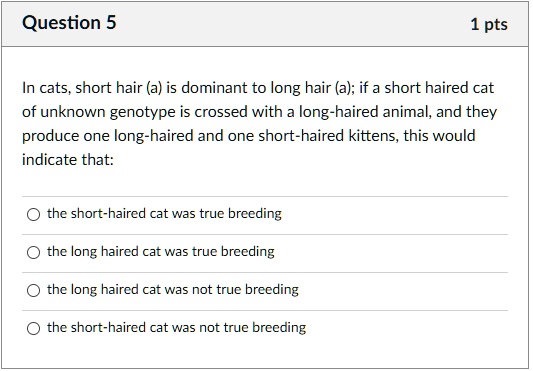
Credit: www.numerade.com
Frequently Asked Questions
What Does True-breeding Mean In Cats?
True-breeding cats produce offspring with identical traits. This means their long fur trait consistently passes to kittens. They are genetically homozygous for that trait, ensuring uniformity in appearance and characteristics.
What Genotype Causes Long Fur In Cats?
Long fur in cats is usually caused by a recessive gene. The genotype for true-breeding long-furred cats is homozygous recessive (ll). Both parents must carry this gene to produce long-haired offspring.
How Can You Identify A True-breeding Long-haired Cat?
A true-breeding long-haired cat consistently produces long-haired kittens. If all offspring have long fur, the parent is likely homozygous recessive. This genetic consistency confirms the true-breeding status of the cat.
Is Long Fur In Cats Dominant Or Recessive?
Long fur in cats is a recessive trait. Cats need two copies of the recessive gene (ll) to show long hair. One copy of the dominant short hair gene (L) results in short fur.
Conclusion
True-breeding long-furred cats have a specific genotype. This means they carry the genes for long fur in both copies. These cats pass long fur traits consistently to their kittens. Understanding their genotype helps breeders predict fur length in offspring. It also supports better breeding choices for desired traits.
Knowing this makes cat genetics easier to grasp. Genetics can seem complex, but clear facts help. True-breeding cats show how genes work in real life. This knowledge benefits both cat lovers and breeders alike.