
Have you ever wondered where your favorite cat breeds come from? Understanding the origins of these unique cats can change the way you see them—and even deepen your bond.
Whether you love the sleek Siamese or the fluffy Maine Coon, knowing their stories reveals surprising facts that might just amaze you. Keep reading, and you’ll discover the fascinating roots behind the cats that have captured your heart.
Ancient Roots Of Cat Breeds
Cats have a long history that dates back thousands of years. Their breeds come from ancient roots that shaped their traits and behavior. Understanding these roots helps us appreciate cats better.
Many cat breeds today still carry traits from their wild ancestors. These early influences are key to their character and appearance.
Wild Ancestors
All domestic cats come from wild ancestors. The African wildcat is the closest relative of today’s house cats. These wildcats lived in deserts and forests.
They hunted small animals and had sharp senses. Their survival skills passed down to domestic cats. This link explains many natural cat behaviors.
Early Domestication
Humans first tamed cats about 9,000 years ago. Early farmers welcomed cats to protect their grain from rodents. Cats helped keep food stores safe.
Over time, cats lived closer to humans. They grew more comfortable around people. This early bond started the long journey of domestication.
Cats In Ancient Civilizations
Ancient Egypt is famous for valuing cats highly. Egyptians saw cats as symbols of protection and grace. They even worshiped cat goddesses and kept cats indoors.
Other civilizations, like Rome and Greece, also admired cats. These cultures spread cats across continents through trade and travel. This helped create different cat breeds worldwide.

Credit: en.wikipedia.org
Regional Origins Of Popular Breeds
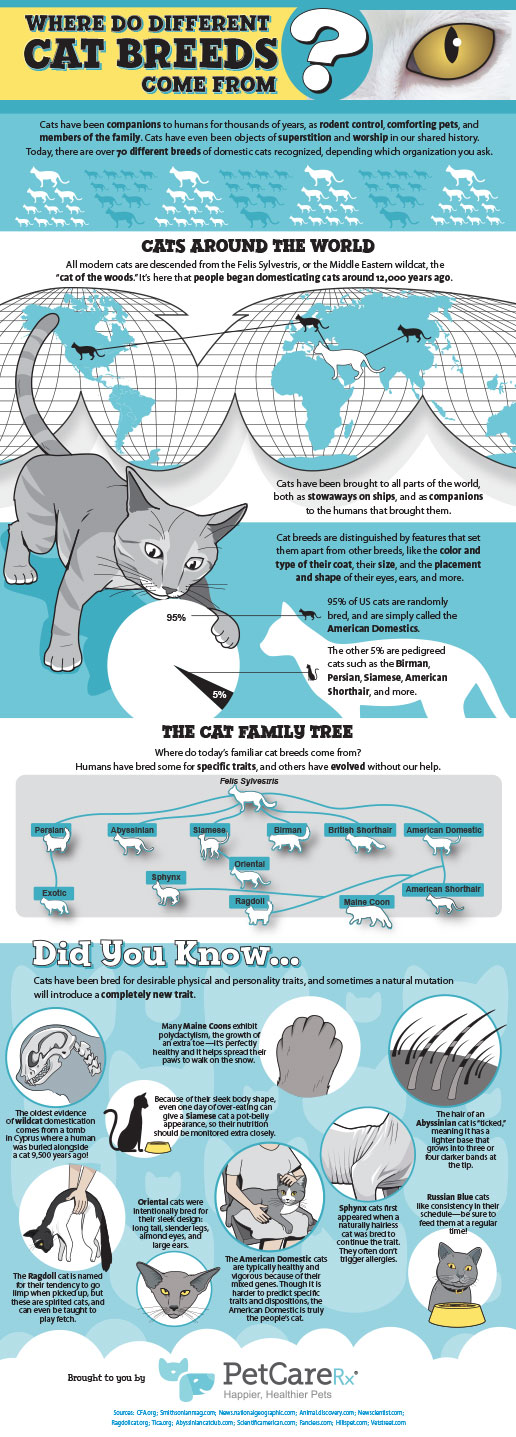
The world of cat breeds is vast and diverse. Each breed has a story tied to a specific place. These places shaped their looks, behavior, and traits. Understanding where popular cat breeds come from helps us appreciate their uniqueness.
Different regions gave rise to distinct breeds. Climate, culture, and environment influenced their development. Below is a look at the regional origins of some well-known cat breeds.
European Breeds
Europe is home to many classic cat breeds. The British Shorthair is famous for its round face and dense coat. The Maine Coon, though American, has European roots from northern Europe. The Russian Blue, with its sleek silver fur, comes from Russia. These cats adapted to cooler climates with thick fur and strong bodies.
Asian Breeds
Asia gave us some elegant and unique cats. The Siamese, from Thailand, has a slender body and striking blue eyes. The Japanese Bobtail is known for its short, bobbed tail and playful nature. These breeds often have distinct colors and patterns that set them apart. Their traits reflect the cultures and environments of their homelands.
Middle Eastern Breeds
The Middle East introduced breeds with exotic looks. The Egyptian Mau is famous for its spotted coat and graceful movements. The Arabian Mau is a natural breed adapted to desert life. These cats are agile and have short coats to handle the heat. Their history connects to ancient civilizations and nomadic tribes.
American Breeds
America developed breeds suited for diverse climates and lifestyles. The American Shorthair is a sturdy cat known for its hunting skills. The Ragdoll, created in the 1960s, is gentle and large with striking blue eyes. The Maine Coon also fits here, known for its rugged build and friendly nature. These breeds show the blend of different influences in the New World.
Genetic Influences On Breed Development
Genetic factors play a big role in shaping different cat breeds. These influences come from natural processes and human actions. They guide how cats look and behave over time. Understanding these helps us see why breeds vary so much today.
Natural Selection
Natural selection means cats adapt to survive in their environment. Traits that help cats hunt or stay safe often pass to their kittens. Over many years, this creates unique features in wild and domestic cats. For example, thick fur in cold places or slim bodies in hot areas.
Human Intervention
Humans have changed cat breeds by choosing which cats to mate. People picked cats with specific looks or traits to create new breeds. This shaping happened mostly in the last few hundred years. Breeders focused on colors, fur types, and behaviors. This made many distinct breeds we see today.
Crossbreeding And Mutation
Crossbreeding mixes genes from two different cat breeds. It can produce new traits or improve health. Sometimes, a natural mutation causes a new feature in a cat. If useful or interesting, breeders keep this trait in the breed. These changes add variety to the cat world.
Mysteries Behind Rare Breeds
Many rare cat breeds have stories filled with mystery. Their origins are not always clear or well documented. Some breeds come from places and times lost to history.
These cats often surprise experts and lovers alike. They carry traits that puzzle scientists and spark curiosity. Understanding their past helps us appreciate their uniqueness.
Legends And Myths
Many rare cat breeds have myths wrapped around them. Some are said to have magical powers or divine origins. Stories passed down through generations add charm to their history.
For example, the Turkish Van is called the “swimming cat.” Legends say it loves water because it once saved people from drowning. Such tales, whether true or not, make these breeds special.
Unknown Ancestry
Some rare breeds have unclear or unknown ancestors. Their roots may be lost in time or mixed with wild cats. This unknown ancestry makes tracing their history difficult.
Examples include the Sokoke cat from Kenya. No one knows exactly where it came from. Its unique look and behavior hint at a wild past, but the full story remains hidden.
Recent Discoveries
New rare breeds continue to be discovered around the world. Scientists and breeders find cats with unusual traits. These discoveries add fresh stories to the mystery of cat breeds.
One example is the Lykoi, also called the “werewolf cat.” It was found in the early 2000s in the United States. Its unusual coat and appearance surprised many cat lovers.
Role Of Cat Fanciers And Breeders
The role of cat fanciers and breeders is central to the history of cat breeds. They help shape the traits and look of different breeds. These people care deeply about cats and work hard to maintain breed qualities. They also guide how breeds grow and change over time.
Their efforts ensure that the unique characteristics of each breed remain clear and consistent. Without their dedication, many breeds might lose their special traits or disappear completely.
Breed Standards
Breed standards describe the ideal look and behavior of a cat breed. Cat fanciers and breeders use these standards as a guide. They help pick which cats can breed to keep the breed pure. Standards include details like coat color, eye shape, and size. These rules keep breeds recognizable and maintain quality.
Preservation Efforts
Preserving rare and old cat breeds is a key task for breeders. They work to protect breeds from fading away. Breeders breed cats carefully to keep original traits alive. They also educate the public about the importance of these breeds. Preservation helps keep the diversity of cats in the world.
Modern Breeding Practices
Modern breeders use safe and healthy methods. They focus on the cats’ health and well-being. Breeding is done with care to avoid genetic problems. Technology helps track health and genetics better than before. These practices create strong and healthy cats for future generations.
Credit: www.petcarerx.com
Impact Of Geography And Climate
Geography and climate played a big role in shaping different cat breeds. Cats adapted to their surroundings to survive and thrive. The places they lived influenced their looks and behavior. This impact is clear in many cat breeds around the world.
Adaptations To Environment
Cats changed over time to fit their habitats. Cold places led to thick fur and strong bodies. Warm areas created cats with short hair and lean shapes. These traits helped cats stay safe and find food. Each breed shows unique traits from its environment.
Influence On Coat And Behavior
Climate influenced how cats look and act. Thick coats protect cats from cold and snow. Thin coats help cats stay cool in heat. Behavior also changed with climate. Some cats became more active at night to avoid heat. Others grew calm and quiet to save energy in cold.
Future Of Cat Breeds
The future of cat breeds holds many exciting possibilities. As people continue to love cats, new breeds will appear. Science and care will shape which cats thrive and which do not. Understanding these changes helps us appreciate cats even more.
Emerging Breeds
New cat breeds appear as breeders focus on unique traits. Some traits come from natural mutations. Others result from careful crossing of existing breeds. These new breeds bring fresh looks and personalities. They add variety and excitement to the cat world.
Genetic Research
Genetic research helps us understand cats better. Scientists study cat DNA to find causes of diseases. This knowledge improves cat health and breeding choices. It also helps protect rare breeds from genetic problems. Research guides breeders to create healthier cats.
Conservation Challenges
Some cat breeds face risks of disappearing. Small breed populations struggle with health and numbers. Loss of habitat affects wild cat relatives. Conservation efforts work to save these breeds and species. Protecting cat diversity is a key challenge for the future.
Credit: www.britannica.com
Frequently Asked Questions
Where Did The First Cat Breeds Originate?
The first cat breeds originated in ancient Egypt and the Near East. These regions domesticated wildcats thousands of years ago. Early cats adapted to human settlements, leading to distinct breeds. Their traits evolved based on environment and human preferences.
How Did Cat Breeds Develop Over Time?
Cat breeds developed through natural selection and selective breeding. Humans chose cats with desirable traits for companionship or hunting. Geographic isolation also helped form unique breeds. Over centuries, this process created the wide variety of cat breeds we see today.
What Regions Influenced Modern Cat Breeds?
Modern cat breeds were influenced by regions like Egypt, Asia, Europe, and the Americas. Each area contributed unique traits and appearances. For example, Siamese cats come from Thailand, while Maine Coons originated in the USA. These regional influences shaped breed diversity.
Why Do Some Cat Breeds Look Different?
Cat breeds look different due to genetic variation and selective breeding. Breeders emphasize specific traits like fur length, color, and body shape. Environmental factors and adaptation also cause physical differences. This diversity makes each breed unique and recognizable.
Conclusion
Cat breeds come from many places around the world. Each breed has a unique story and traits. People have bred cats for looks and skills for centuries. This history helps us understand why cats look and act differently. Knowing where cat breeds come from makes us appreciate them more.
Cats bring joy in many forms, thanks to their diverse backgrounds. Exploring their origins is a fun way to connect with these pets. Every cat breed tells a tale worth discovering and enjoying.