
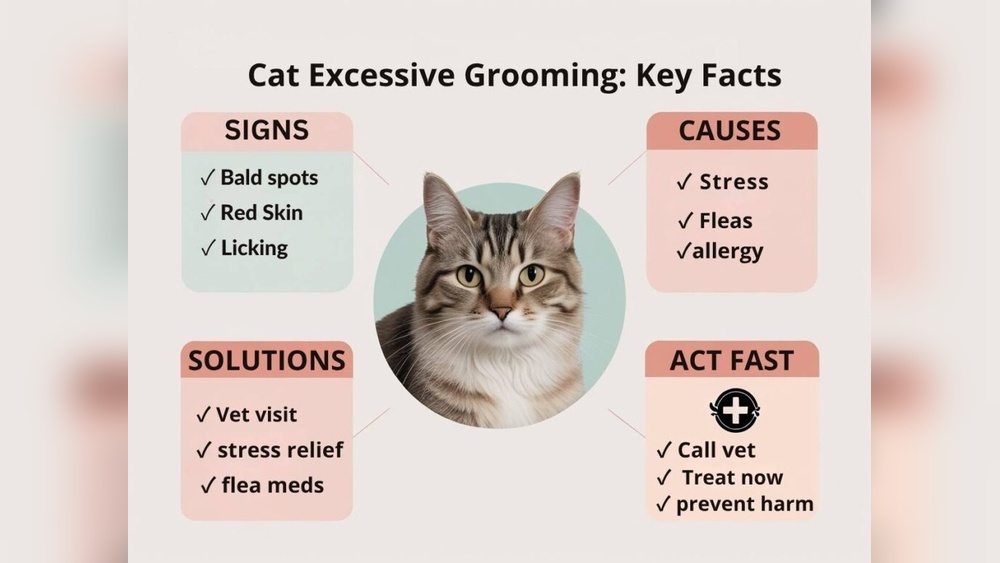
Have you noticed your cat spending more time licking or biting their fur than usual? Excessive grooming can be more than just a quirky habit—it might signal that something is wrong.
If you’re wondering, “Why is my cat excessive grooming? ” You’re not alone. Understanding the reasons behind this behavior can help you keep your furry friend happy and healthy. Keep reading to discover the common causes and what you can do to help your cat feel better.
Credit: pittwateranimalhospital.com.au
Signs Of Excessive Grooming
Excessive grooming in cats can signal health or emotional problems. Cats groom to stay clean, but too much can harm their skin and fur. Spotting early signs helps protect your cat’s well-being. Watch for changes in behavior and physical symptoms. Knowing when to seek help is important.
Behavioral Changes
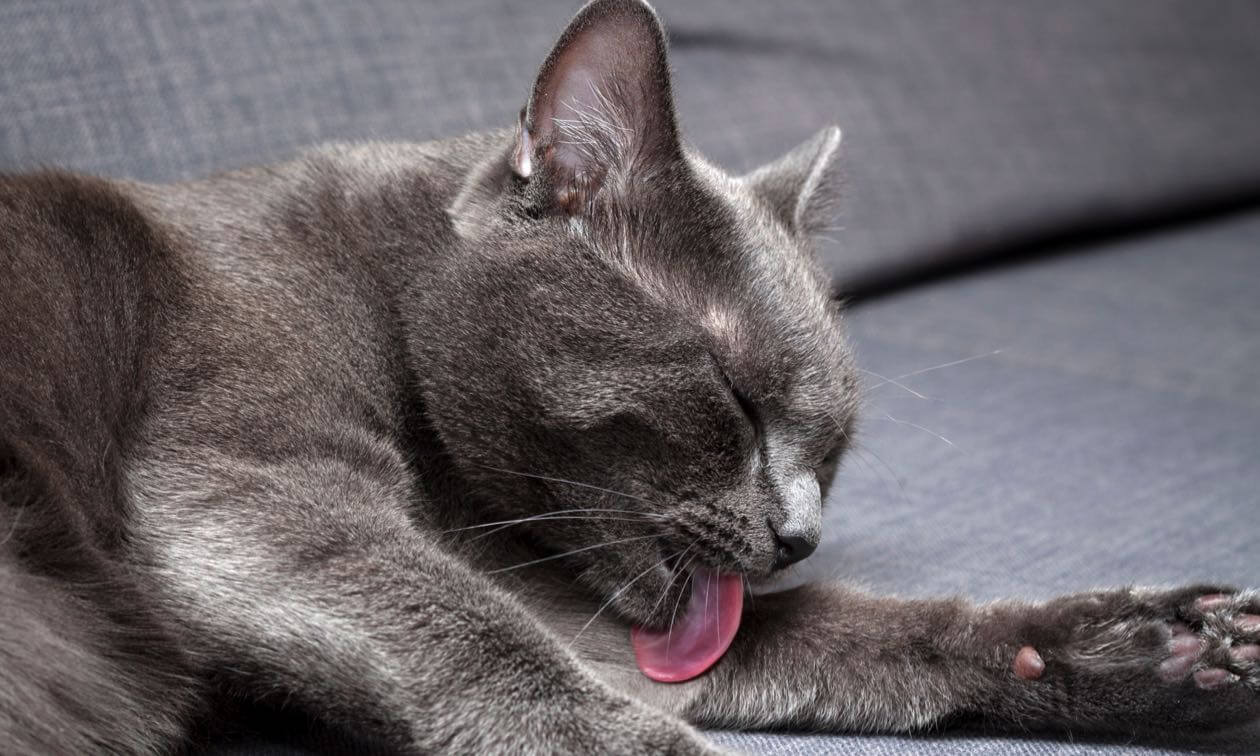
Notice if your cat grooms more than usual. Repetitive licking or biting in one spot is a red flag. Your cat may seem restless or anxious. It might hide or avoid playtime. These changes suggest stress or discomfort.
Physical Symptoms
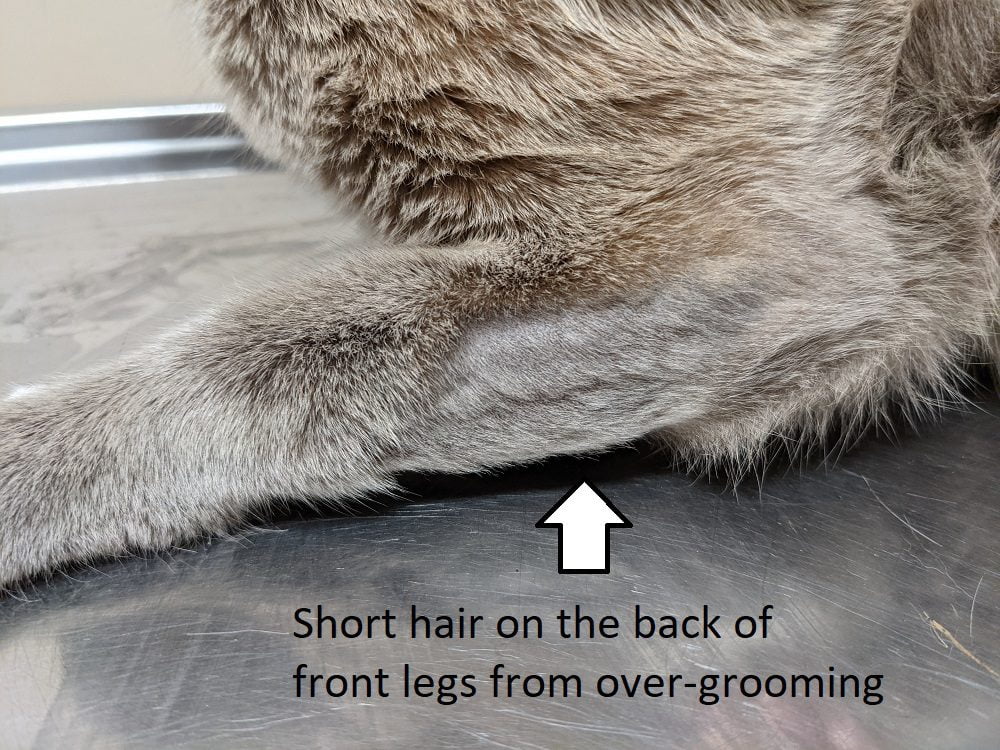
Look for bald patches or red, irritated skin. Scabs or sores can appear from over-licking. Fur may look uneven or thin in some areas. Your cat might scratch or bite the same spot often. These signs show grooming is harming the skin.
When To Seek Help
Visit a vet if you see wounds or hair loss. If your cat grooms nonstop or acts very nervous, get advice. Persistent grooming can mean allergies, parasites, or pain. A vet can find the cause and suggest treatment. Early care can stop damage and ease your cat’s stress.
Common Causes
Excessive grooming in cats often signals an underlying problem. Understanding common causes helps you address the issue quickly. Cats groom themselves daily, but too much can cause harm.
Several factors can trigger this behavior. These include health problems, environmental issues, and emotional stress. Identifying the cause is key to helping your cat feel better.
Skin Allergies
Skin allergies are a frequent cause of over-grooming. Cats react to allergens like pollen, dust, or food. Their skin becomes itchy, leading to constant licking or scratching. Allergies may cause redness, bumps, or hair loss.
Parasite Infestations
Parasites such as fleas or mites irritate your cat’s skin. The itching from parasites makes cats groom excessively. Check for small bugs or flea dirt in the fur. Parasite infestations need fast treatment to stop discomfort.
Stress And Anxiety
Stress can cause cats to groom more than usual. Changes in the home or loud noises might trigger anxiety. Grooming acts as a way to calm themselves. Over time, this habit can become compulsive and harmful.
Pain Or Discomfort
Physical pain may cause a cat to lick a certain spot repeatedly. Injuries or arthritis can lead to this behavior. Grooming helps soothe the pain but can cause skin damage. Watch for signs like limping or sensitivity to touch.
Environmental Triggers
Environmental triggers often cause cats to groom themselves more than usual. Changes around them can make cats feel stressed or uneasy. This stress can lead to excessive grooming as a way to cope.
Cats are creatures of habit. Sudden shifts in their environment can disrupt their sense of safety. Understanding these triggers helps you support your cat better.
Changes In Routine
Cats thrive on routine. Feeding, playtime, and sleeping schedules create comfort. When these routines change, cats may feel anxious. This anxiety can lead to more grooming than normal. Even small changes can upset a cat’s balance.
New Pets Or People
Introducing new pets or people can stress cats. They may feel threatened or unsure. To calm themselves, cats might groom excessively. This behavior helps them feel more in control. It can also be a sign they need time to adjust.
Lack Of Stimulation
Boredom affects cats too. Without enough play or mental activity, cats can become restless. Excessive grooming can happen as a way to fill time. Providing toys and interaction helps reduce this behavior. A busy cat is a happier, healthier cat.
:strip_icc()/how-to-stop-cat-over-grooming-554052-02-292560d5fa1542458556eff312f669d7.jpg)
Credit: www.thesprucepets.com
Medical Conditions Linked To Grooming
Excessive grooming in cats can signal health problems. Understanding medical conditions linked to grooming helps in spotting issues early. Cats often groom to relieve discomfort or irritation caused by illness. Sometimes, this grooming becomes too frequent or intense, indicating a deeper problem.
Dermatitis And Infections
Skin problems often cause cats to groom excessively. Dermatitis, an inflammation of the skin, makes cats itchy. They lick or scratch to ease the itch but may make it worse. Infections from bacteria or fungi also cause irritation. These infections lead to redness, swelling, and hair loss.
Hormonal Imbalances
Hormones affect many body functions, including skin health. Thyroid issues or adrenal gland problems change hormone levels. These imbalances can cause dry or oily skin. Cats may groom too much to manage the discomfort. Hormonal problems often need a vet’s diagnosis and treatment.
Neurological Disorders
Brain or nerve diseases can change how cats feel pain or pleasure. These changes may cause repetitive grooming behaviors. Cats might lick one spot for a long time without stopping. Neurological issues may also cause anxiety, making grooming a coping tool. A vet can check for neurological causes behind excessive grooming.
Effective Solutions
Excessive grooming in cats can signal stress or health problems. Finding the right solution helps your cat feel better. Effective solutions often involve several steps. Each step targets a different cause of over-grooming. Careful attention and patience bring the best results.
Veterinary Treatment Options
Visit a vet to rule out medical issues. Skin infections, allergies, or parasites may cause grooming. The vet can prescribe medicine or shampoos. Treating pain or irritation reduces grooming urges. Regular check-ups keep your cat healthy and calm.
Behavioral Therapy
Stress often leads to too much grooming. Behavioral therapy helps your cat relax. Techniques include gentle play and positive reinforcement. Avoid punishment, which increases anxiety. Consistent routines and quiet time reduce nervousness.
Environmental Enrichment
Provide toys and climbing spaces. These keep your cat busy and happy. New smells and sounds also stimulate the mind. A calm environment lowers stress. A window perch offers natural light and outdoor views.
Diet And Nutrition Adjustments
Healthy food supports skin and coat health. Add supplements like omega-3 fatty acids if needed. Avoid food allergies that can irritate skin. Fresh water and balanced meals improve overall well-being. Consult your vet about the best diet.
Preventing Excessive Grooming
Preventing excessive grooming in cats helps keep them healthy and happy. This behavior can cause skin problems and discomfort. Taking steps early can stop it from getting worse. Understanding simple ways to prevent this habit benefits both you and your cat.
Regular Vet Checkups
Regular vet visits catch health problems early. Skin allergies or parasites often cause grooming issues. Your vet can give medicine or advice to ease discomfort. Checking your cat’s health helps prevent excessive grooming habits.
Stress Reduction Techniques
Stress makes cats groom more than usual. Creating calm spaces helps reduce anxiety. Gentle play and quiet time soothe your cat’s mind. Using soft voices and gentle petting lowers stress levels.
Safe And Stimulating Environment
Provide toys and scratching posts to keep your cat busy. A busy cat grooms less out of boredom. Keep your home safe and clean for your cat. Comfortable spots to rest reduce nervous grooming.
Credit: www.zoetispetcare.com
Frequently Asked Questions
Why Is My Cat Grooming Excessively?
Excessive grooming in cats often signals stress, allergies, or skin infections. It can also indicate pain or parasites. Identifying the cause early helps prevent skin damage and discomfort. Consult a vet if grooming seems obsessive or causes bald patches.
Can Allergies Cause My Cat To Overgroom?
Yes, allergies to food, pollen, or flea bites can trigger overgrooming. Allergic reactions cause itching and irritation, prompting cats to lick or scratch excessively. Proper diagnosis and treatment help reduce symptoms and improve your cat’s comfort.
How Does Stress Affect My Cat’s Grooming Habits?
Stress leads cats to groom excessively as a coping mechanism. Changes in environment, routine, or new pets can cause anxiety. Reducing stressors and providing a calm space can normalize grooming behavior and improve your cat’s well-being.
When Should I See A Vet For Overgrooming?
Visit a vet if your cat grooms to the point of bald spots, sores, or bleeding. Persistent overgrooming may indicate medical or psychological issues needing professional treatment. Early intervention prevents worsening skin damage and discomfort.
Conclusion
Excessive grooming in cats can signal stress or health issues. Watch your cat closely for changes in behavior or skin problems. Try to reduce stress and keep their environment calm. Regular vet visits help catch problems early. Understanding why your cat grooms too much keeps them happy and healthy.
Small steps make a big difference in their well-being. Stay patient and caring to support your furry friend.