

Are you trying to decide between a cat or a dog but worried about potty training? You’re not alone.
Many pet owners wonder which pet is easier to train when it comes to bathroom habits. Knowing the answer can save you time, stress, and frustration. You’ll discover the key differences that make one pet simpler to potty train than the other.
Keep reading, and you’ll feel more confident making the right choice for your home and lifestyle.

Credit: www.amazon.com
Potty Training Basics
Potty training is an important step for both cats and dogs. It helps keep your home clean and your pet healthy. Understanding the basics makes the process easier. Both animals need patience and clear guidance. Knowing what to expect can reduce stress for you and your pet.
Key Training Principles
Consistency is very important in potty training. Use the same spot for your pet to go. Praise your pet immediately after they go in the right place. Keep a regular schedule for meals and bathroom breaks. Watch your pet’s behavior for signs they need to go. Clean accidents thoroughly to avoid repeat mistakes.
Common Challenges
Pets may have accidents during training. Young animals often struggle with bladder control. Some pets are shy or scared to go outside. Confusion can happen with multiple pets in one home. Stress or changes in routine can cause setbacks. Patience and calmness help overcome these challenges.
Cats And Litter Habits
Cats have unique habits when it comes to using the bathroom. Understanding these habits helps in potty training. They naturally prefer a clean and private spot for their bathroom needs.
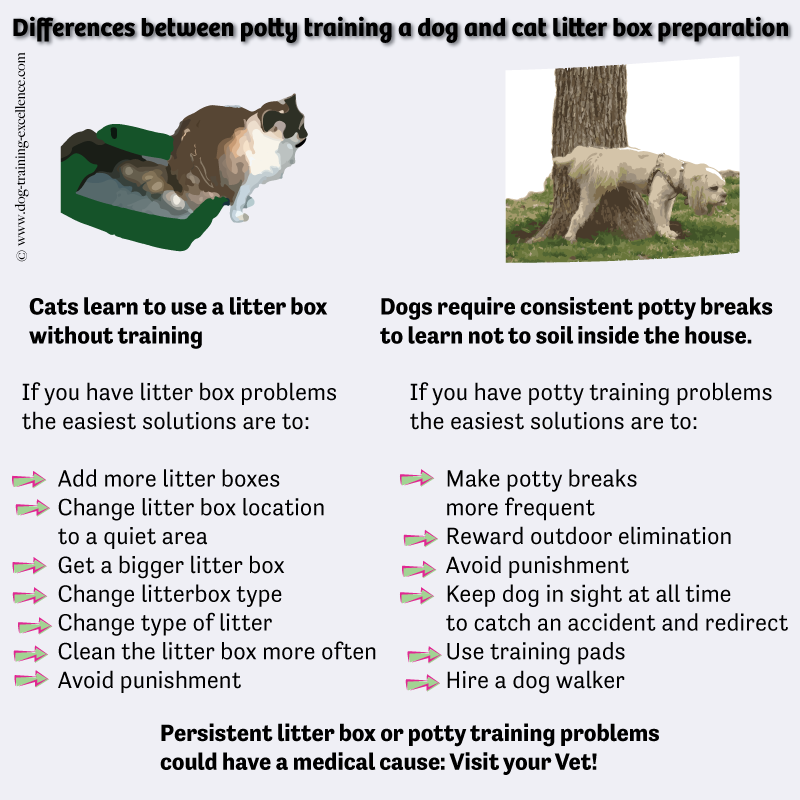
Many cat owners find litter training easier than training dogs to go outside. Cats use their litter box instinctively if it is set up well and kept clean.
Natural Instincts
Cats bury their waste to hide their scent from predators. This behavior is strong and natural. It makes them want a soft, sandy place to dig. Litter boxes mimic this natural environment.
This instinct helps cats learn to use a litter box quickly. They avoid dirty or smelly places. Cleanliness matters a lot to cats.
Litter Box Setup Tips
Place the litter box in a quiet, private area. Avoid noisy or busy spots. Cats need peace when they use the litter box.
Choose a box that is easy for your cat to enter and exit. Keep the litter fresh by scooping daily. Change the litter completely once a week.
Try unscented, clumping litter. It feels soft and helps control odor. Avoid strong scents that can scare cats away.
Having more than one box is helpful, especially with multiple cats. This reduces accidents and stress. Clean boxes encourage cats to use them regularly.
Dogs And Housebreaking
Housebreaking a dog means teaching it where to go to the bathroom. This process takes time and patience. Dogs need clear guidance to learn good habits. Consistency helps dogs understand what is expected of them.
Many dog owners find housebreaking easier when they follow a routine. Puppies, especially, benefit from regular schedules. Early training sets the stage for well-behaved adult dogs.
Puppy Training Techniques
Start training as soon as you bring your puppy home. Use positive rewards like treats and praise. Take the puppy outside often, especially after eating or waking. Watch for signs they need to go. Praise them immediately after they finish outside. Avoid punishment; it confuses the puppy and slows learning.
Establishing A Routine
Set regular times for feeding and bathroom breaks. Take the dog out first thing in the morning and before bed. Consistent timing helps the dog’s body adjust. Keep bathroom spots the same. This makes it easier for the dog to understand where to go. A steady routine reduces accidents inside the home.
Comparing Training Time
Training time matters a lot for new pet owners. Knowing how long it takes to potty train cats and dogs helps set clear expectations. Each animal learns at its own pace. The time also depends on the pet’s age, personality, and previous experience.
Typical Duration For Cats
Cats usually learn to use the litter box quickly. Many kittens start using it naturally within a few days. Adult cats may take a week or two to adjust. Cats are clean animals and prefer a tidy spot. This habit helps them learn faster. Consistency and a good litter box location speed up training.
Typical Duration For Dogs
Dogs take longer to potty train than cats. Puppies may need several weeks to learn. Small breeds might train faster than large breeds. Training time can range from 4 to 12 weeks. Regular outdoor trips and positive reinforcement are key. Patience and routine help dogs understand where to go.
Behavioral Factors
Behavioral factors play a big role in potty training pets. Cats and dogs have different habits and personalities. Understanding these can help you decide which pet might be easier to train.
Independence Vs. Social Needs
Cats are very independent animals. They like to do things on their own. This means they often learn to use the litter box by themselves. Dogs need more attention from people. They want to be close and follow commands. This social nature makes dogs rely on their owner for guidance during training.
Response To Training
Dogs usually respond well to training. They want to please their owner. Using treats and praise helps dogs learn faster. Cats can be trained too, but they may not always listen. Cats learn best when training fits their routine and space. Patience is key for both pets, but dogs often show quicker results.

Credit: www.zoivanepets.com
Expert Tips For Success
Potty training pets can be a challenge for many owners. Success depends on how well you apply certain techniques. Experts agree that a few simple tips can make training smoother and faster. Focus on clear steps and patient care.
Consistency And Patience
Set a daily routine for potty breaks. Take your pet outside at the same times each day. This helps them learn when to go. Expect accidents and do not punish your pet. Patience is key. Training takes time, and every pet learns at its own pace.
Using Positive Reinforcement
Reward your pet immediately after they go potty in the right place. Use treats, praise, or play as rewards. This teaches them that good behavior gets attention. Avoid negative reactions. Positive reinforcement encourages pets to repeat good habits.
Common Mistakes To Avoid
Potty training pets can be tricky. Many pet owners face common mistakes that slow progress. Avoiding these errors helps your cat or dog learn faster. Understanding these pitfalls makes training smoother and less stressful.
Punishment Pitfalls
Punishing pets for accidents confuses them. They do not connect punishment with their mistakes. This fear can cause hiding or more accidents. Positive reinforcement works better than punishment. Reward good behavior to encourage learning.
Ignoring Signals
Pets often show signs before needing to potty. Dogs may sniff or circle. Cats might scratch near their litter box. Missing these signals leads to accidents inside. Watch your pet closely to catch these signs early. Respond quickly to guide them to the right spot.
Credit: www.dog-training-excellence.com
Choosing Based On Lifestyle
Choosing a pet for potty training depends a lot on your lifestyle. Different pets need different care and time. Knowing what fits your daily routine can help you pick the right one. Cats and dogs have different potty training needs that affect your choice.
Time Commitment
Dogs need more time for potty training than cats. Puppies require regular outdoor trips every few hours. This means you must be ready to spend time outside daily. Cats use litter boxes, which need less frequent cleaning. You only need to scoop the box once or twice a day. Cats suit people with busier schedules better.
Living Space Considerations
Living space affects how easy potty training will be. Dogs need enough room to move and go outside easily. Apartments without yards can make dog training harder. Cats adapt well to small spaces and indoor living. A litter box fits easily in small homes. For small spaces, cats often work better than dogs.
Frequently Asked Questions
Which Pet Is Easier To Potty Train, Cats Or Dogs?
Dogs are generally easier to potty train due to their social nature. Cats instinctively use litter boxes, requiring less training. However, dogs respond better to commands and routines, making the process more straightforward for owners.
How Long Does Potty Training Take For Cats And Dogs?
Potty training dogs typically takes 4 to 6 weeks with consistent effort. Cats usually adapt faster, often within a few days, by using a litter box. Training duration varies based on breed, age, and owner’s consistency.
What Methods Work Best For Potty Training Dogs?
Positive reinforcement, consistent schedules, and crate training work best for dogs. Rewarding good behavior encourages faster learning. Frequent outdoor trips help dogs understand where to relieve themselves.
Are Cats Naturally Clean And Easy To Train?
Yes, cats have a natural instinct to bury waste, making litter training simple. They prefer clean litter boxes and usually require less supervision during training than dogs.
Conclusion
Potty training cats or dogs depends on the pet’s nature and your patience. Cats usually learn quickly to use a litter box. Dogs need more time and consistent training to go outside. Both pets can be trained well with care and routine.
Choose the pet that fits your lifestyle best. Remember, every animal is unique and learns at its own pace. Success comes from understanding and gentle guidance. Training becomes easier with love and daily practice. Which pet suits you better? The answer lies in your home and heart.