
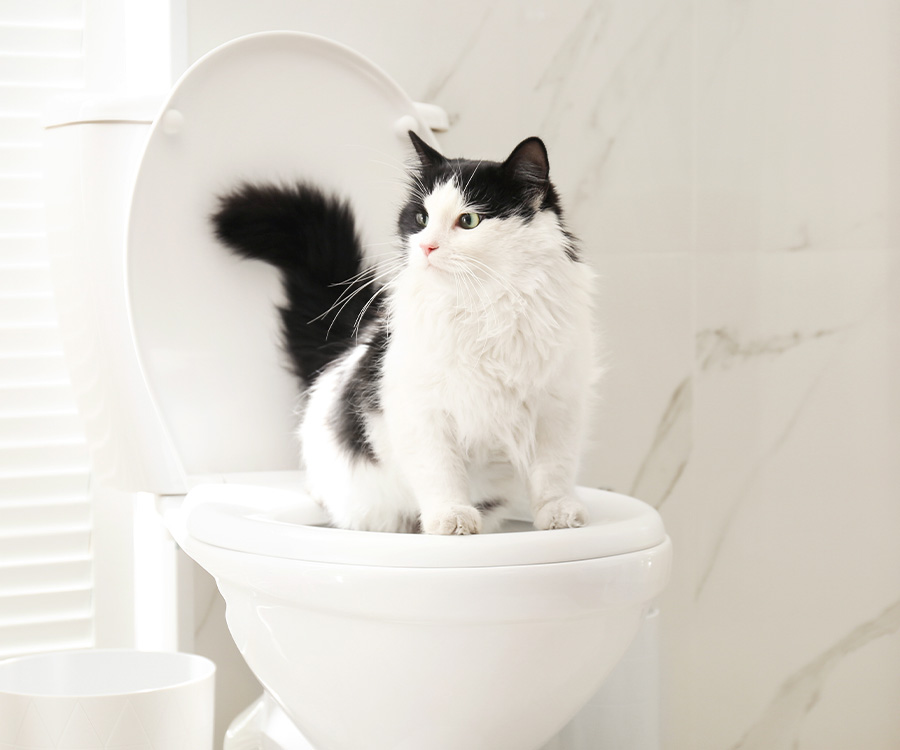
Have you ever wondered if your cat could ditch the litter box for good? Potty training a cat might sound like a dream, but is it really possible?
If you’re tired of scooping and dealing with messy litter, you’re not alone. Imagine the convenience of your cat using the toilet just like you do. You’ll discover what it takes to potty train your cat, the challenges you might face, and whether it’s worth the effort.
Keep reading to find out if this clever trick can work for you and your furry friend.
Cat Potty Training Basics
Potty training a cat may sound unusual, but many pet owners try it. Understanding the basics helps. Cats have natural habits and instincts that affect training. Knowing these habits makes the process easier. This section explains how cats use the litter box and the benefits of potty training.
How Cats Use The Litter Box
Cats bury their waste to hide scent from predators. This is a natural behavior. Most cats learn to use a litter box quickly. They dig a small hole, do their business, then cover it. Clean litter boxes attract cats to use them. Dirty boxes often cause cats to avoid them. Cats prefer quiet, private places for their bathroom. Location of the box matters too. It should be easy to access but away from loud areas.
Benefits Of Potty Training
Potty training a cat can save money on litter. It reduces litter dust and mess around the house. It also makes cleaning easier for owners. Some cats dislike litter texture and avoid the box. Training them to use a toilet solves this problem. It can improve hygiene in the home. No more litter tracked on floors or furniture. Toilet-trained cats may feel more independent. Training builds trust and communication between cat and owner.
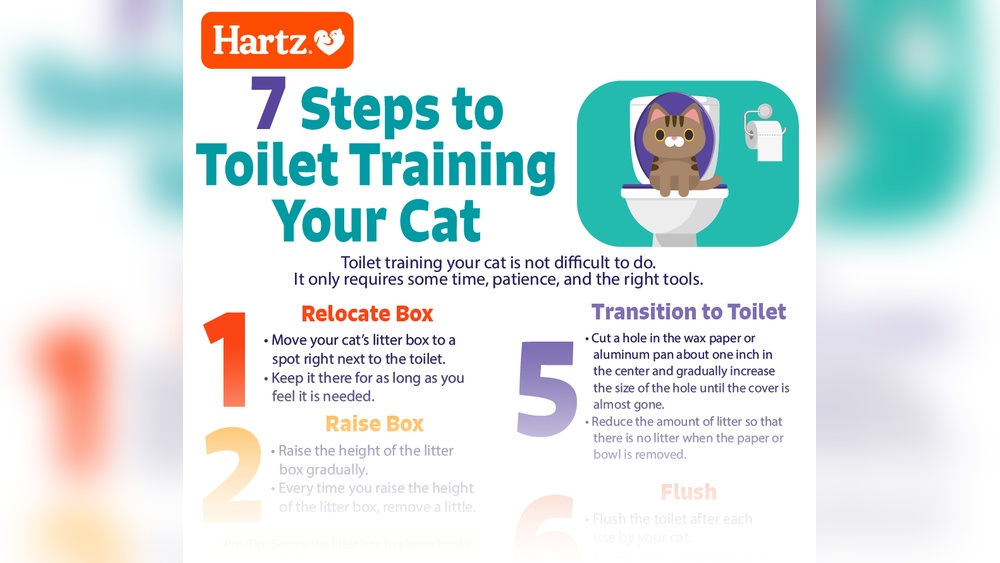
Credit: www.hartz.com
Preparing For Training
Preparing your cat for potty training takes patience and the right setup. Start with clear steps to make the process smooth. A calm, safe space helps your cat feel ready. The equipment you choose matters a lot. It needs to fit your cat’s size and comfort. Setting up the right environment encourages good habits early on. Both equipment and environment work together for success. Let’s explore what you need to prepare.
Choosing The Right Equipment
Select a sturdy training seat that fits your toilet well. Make sure it has a secure base to avoid slipping. Some seats come with adjustable rings to fit different toilets. A training seat with a shallow hole helps your cat get used to balance. Use flushable litter that is safe and easy to clean. Avoid scented litters that might scare your cat. Prepare cleaning supplies for quick messes. Keep everything ready to build a routine.
Creating A Safe Environment
Pick a quiet bathroom with little noise and distractions. Keep the door open for easy access at all times. Remove any items your cat might knock over or hurt itself on. A calm space helps your cat feel more confident. Make sure the toilet lid stays up during training. Place a step stool or ramp for easy climbing. Watch your cat’s behavior and adjust the space if needed. A safe environment reduces stress and encourages learning.
Step-by-step Training Process
Potty training a cat can seem tricky but breaking it down helps. The process needs patience and clear steps. Each phase builds on the last to help your cat adjust.
Gradual Litter Box Transition
Start by moving the litter box closer to the bathroom. Do this slowly, a few inches each day. Your cat gets used to the new spot without stress. Keep the litter box clean to encourage use. This step sets the foundation for the next phase.
Introducing The Potty Seat
Place a potty training seat over the toilet. Let your cat explore it without pressure. Add some litter on the seat to make it familiar. Watch your cat’s reactions and adjust the seat’s height if needed. This stage helps your cat get used to the new toilet area.
Encouraging Consistent Use
Reward your cat with treats or praise after using the seat. Keep the toilet lid open and seat steady. Practice patience; accidents may happen. Gradually reduce the litter on the seat until your cat uses the toilet directly. Consistency is key to success in this step.

Credit: www.reddit.com
Common Challenges
Potty training a cat is not always easy. Many pet owners face several common challenges. These problems can slow progress and test patience. Understanding these challenges helps prepare for the journey ahead. Here are some common issues you may face during cat potty training.
Dealing With Accidents
Accidents happen often in the training process. Cats may urinate outside the toilet or litter box. This can frustrate owners but is normal. Cleaning accidents quickly helps stop bad smells. Avoid punishing the cat to prevent fear or anxiety. Patience is key when accidents occur.
Handling Resistance
Some cats resist using the toilet at first. They may prefer their old habits. Changes in routine can cause stress or confusion. Encouraging gentle steps and positive reinforcement helps. Give your cat time to adjust to new methods. Consistency will reduce resistance over time.
Maintaining Hygiene
Keeping the toilet clean is crucial during training. Cats dislike dirty or smelly areas. Regular cleaning prevents them from avoiding the toilet. Use mild cleaners safe for pets. Maintaining hygiene supports healthy habits and comfort for your cat.
Tips For Success
Potty training a cat takes effort and care. Success depends on following good tips. These tips help make the process smooth and less stressful for you and your cat.
Focus on gentle methods and watch your cat closely. With time, you can guide your cat to use the toilet. Here are some key tips for success.
Positive Reinforcement Techniques
Reward your cat with treats when it uses the toilet correctly. Praise your cat softly to encourage good behavior. Avoid punishment as it can scare your cat. Use toys or gentle petting as extra rewards. This helps your cat want to learn and repeat good habits.
Patience And Consistency
Training takes time. Your cat needs many tries to learn. Stick to a daily routine and keep the training sessions short. Consistent practice helps your cat understand what you want. Do not rush or change the method often. Patience makes the process easier for both of you.
Monitoring Cat’s Behavior
Watch your cat’s actions closely during training. Notice signs of stress or confusion. Adjust your approach if your cat seems upset. Check if your cat prefers certain times for bathroom breaks. Understanding your cat’s habits helps improve training. Stay calm and observe to help your cat succeed.

Credit: raleighncvet.com
When To Seek Professional Help
Potty training a cat can be a tricky task. Sometimes, problems arise that need expert advice. Knowing when to get help saves time and stress. It keeps your cat healthy and happy.
Signs Of Health Issues
Watch for changes in your cat’s bathroom habits. Frequent accidents outside the litter box may signal health problems. Straining, blood in urine, or excessive licking also indicate issues. Sudden changes in behavior or appetite might relate to illness. These signs mean a vet visit is necessary.
Consulting A Veterinarian Or Trainer
A veterinarian can rule out medical causes for potty issues. They offer tests and treatments to help your cat feel better. A professional trainer provides tips on behavior and training methods. They can guide you on the best approach to potty train your cat. Seek help early to avoid frustration and keep progress steady.
Frequently Asked Questions
Can Cats Learn To Use A Toilet Instead Of A Litter Box?
Yes, cats can be trained to use a toilet with patience and consistent steps. It requires gradual transition and positive reinforcement. Not all cats adapt well, so success varies by cat personality and owner commitment.
How Long Does Potty Training A Cat Usually Take?
Potty training a cat typically takes 4 to 8 weeks. The timeline depends on the cat’s age, temperament, and training consistency. Gradual progress and patience are key for a successful toilet training process.
What Are The Benefits Of Potty Training A Cat?
Potty training reduces litter box odor and mess in your home. It saves money on litter and simplifies cleaning. It can also be convenient for owners with limited space or multiple cats.
Are There Risks In Toilet Training A Cat?
Yes, some cats may develop stress or refuse to use the toilet. Improper training can cause accidents or health issues like urinary problems. Always monitor your cat’s comfort and consult a vet if problems arise.
Conclusion
Potty training a cat takes time, patience, and consistency. Not all cats will learn, but many can adapt. Training helps reduce litter box mess and odor. It also saves space and cleaning effort. Keep expectations realistic and reward small progress.
Each cat is different and learns at its own pace. Stay calm and positive throughout the process. Potty training is possible, but it needs your commitment. Try it step by step and see how your cat responds.