
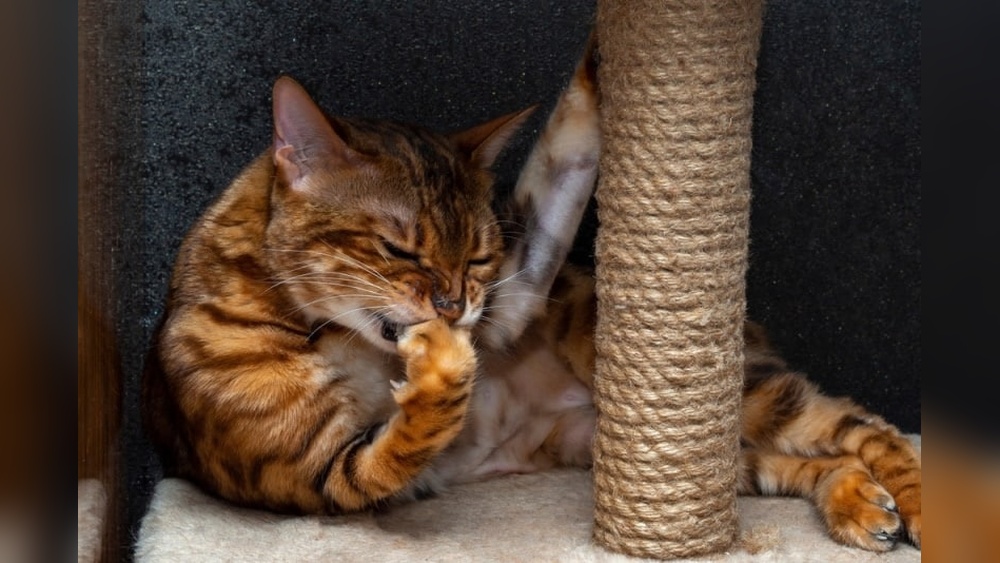
Have you ever watched your cat carefully nibble on her paws while grooming and wondered why she does it? It might seem a little strange or even worrying.
You’re not alone—many cat owners ask the same question. Understanding this behavior can help you ensure your furry friend stays happy and healthy. Keep reading to discover the surprising reasons behind your cat’s paw-biting and what it means for her well-being.
Cat Grooming Behavior
Cats spend a lot of time grooming themselves. Grooming helps them stay clean and healthy. It also feels good to them. Watching a cat groom can show you how careful and precise they are.
Grooming is more than just cleaning. It helps cats relax and reduces stress. Cats have special ways to keep their fur smooth and skin safe. Understanding these behaviors can explain why your cat bites her paws during grooming.
Normal Grooming Patterns
Cats usually lick their fur in a smooth, steady way. They start from the head and move to the tail. They use their tongue to remove dirt and loose hair. Grooming often includes rubbing the face with their paws. Cats also nibble or bite gently to clean tough spots or remove mats.
Common Grooming Tools Cats Use
Their tongue is the main tool for grooming. It has tiny, rough bumps that help catch loose hair. Cats also use their teeth for biting small tangles or debris. Their paws help spread saliva and clean areas hard to reach by tongue alone. Sometimes, cats use their claws lightly to scratch or remove dirt.
Role Of Paws In Grooming
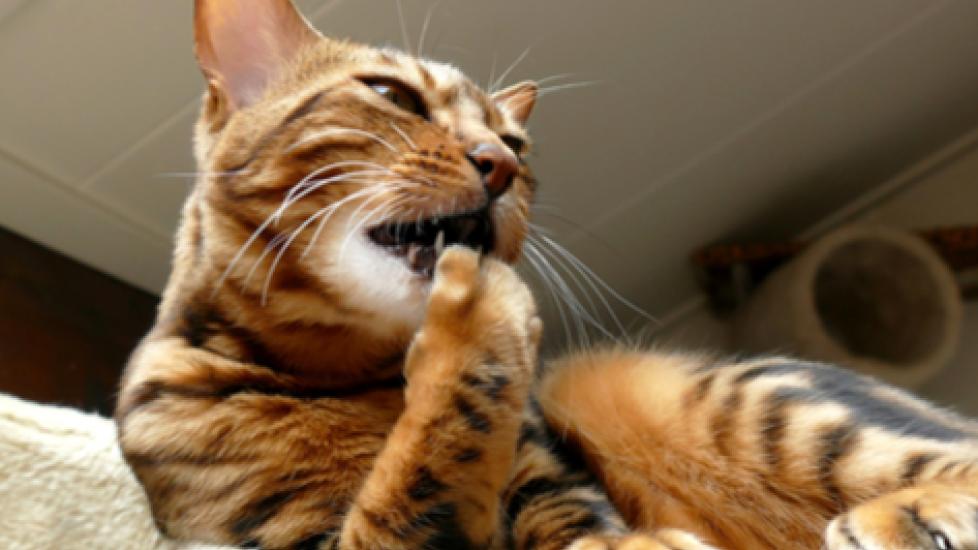
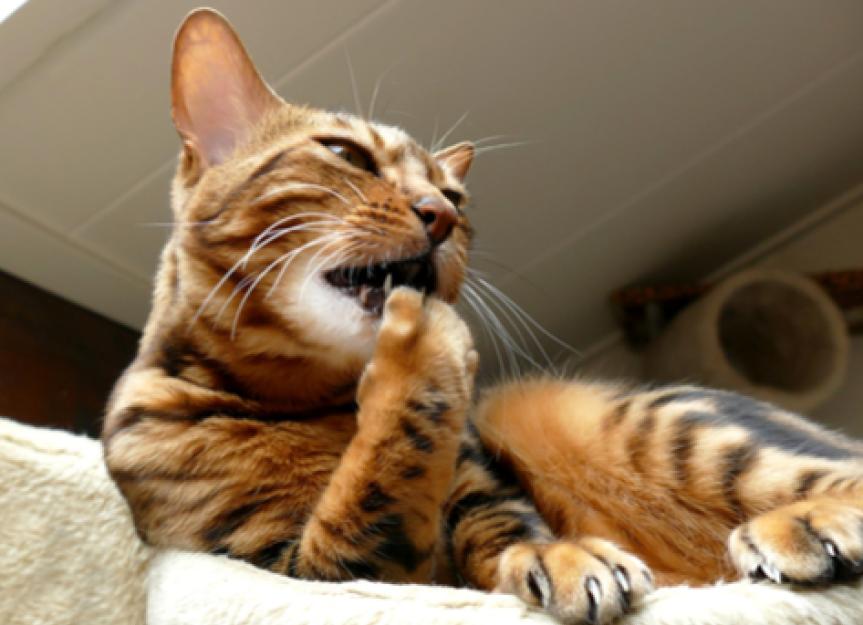
Paws are very important in grooming. Cats lick their paws to wet them with saliva. Then, they rub their face and head with the wet paw. This helps clean hard-to-reach areas. Cats also bite their paws to remove dirt or small objects. Biting paws can be part of normal grooming, especially if paws feel itchy or dirty.

Credit: www.cpccares.com
Reasons For Paw Biting
Cats bite their paws during grooming for many reasons. Sometimes, it is normal behavior. Other times, it signals a problem. Understanding why your cat bites her paws helps you care better for her. Watch closely to notice any changes or signs of discomfort.
Irritation Or Allergies
Cats may bite their paws if they feel itchy or irritated. Allergies to food, pollen, or chemicals can cause paw itching. Allergic reactions make the skin red and sore. Biting helps relieve the uncomfortable sensation.
Parasites And Infections
Fleas, ticks, or mites often cause cats to bite their paws. These parasites irritate the skin and cause itching. Bacterial or fungal infections can also lead to paw biting. Infections make the paws swollen and painful.
Anxiety And Stress
Stress can make cats bite their paws more than usual. Anxiety from changes in the home or loud noises affects their behavior. Biting paws helps some cats feel calmer. This is a coping mechanism for stress relief.
Pain Or Injury
Injuries to paws cause cats to bite or lick the area. Cuts, bruises, or broken nails hurt and trigger biting. Biting may protect the sore spot or try to clean it. Watch for limping or swelling as signs of injury.
Behavioral Issues
Some cats develop habits of biting paws without medical reasons. This repetitive behavior is known as compulsive grooming. It can result from boredom or lack of attention. Providing toys and playtime may reduce this behavior.
Health Problems Linked To Paw Biting
Cats often bite their paws during grooming. This behavior can signal health problems. Paying attention helps you protect your cat’s well-being.
Several health issues cause paw biting. These problems need care and treatment. Understanding them helps catch issues early.
Dermatitis And Skin Conditions
Dermatitis causes red, itchy skin. Cats bite paws to relieve itching. Allergies, irritants, or dry skin trigger dermatitis. Scratching worsens the condition. Watch for swelling or hair loss.
Fungal And Bacterial Infections
Infections cause pain and discomfort. Cats bite paws to ease soreness. Fungal infections create flaky, smelly areas. Bacterial infections cause redness and pus. Both need veterinary treatment to heal.
Nail And Pad Disorders
Problems with nails or pads cause biting. Overgrown or broken nails hurt cats. Injuries to paw pads cause pain. Foreign objects stuck in paws increase biting. Regular checks prevent these disorders.
How To Identify The Cause
Understanding why your cat bites her paws during grooming starts with identifying the cause. Careful observation helps spot changes in behavior. Checking for physical signs reveals possible problems. Knowing when to visit the vet ensures timely care for your pet.
Observing Cat’s Behavior
Watch your cat closely while she grooms. Notice how often she bites her paws. See if she seems stressed or anxious. Pay attention to any sudden changes in her habits. These clues help understand her discomfort.
Checking For Physical Signs
Look at your cat’s paws carefully. Check for redness, swelling, or cuts. Notice if the skin looks dry or flaky. See if your cat’s claws are broken or sharp. These signs might cause her to bite her paws.
When To Visit The Vet
Seek veterinary help if paw biting is frequent or severe. Visit the vet if your cat limps or cries. A vet can check for infections or allergies. Early treatment prevents bigger health problems.
Treatment And Prevention
Understanding how to treat and prevent your cat’s paw biting helps keep her healthy. This behavior may signal discomfort or stress. Proper care can reduce the problem and improve her well-being. Explore simple ways to help your cat feel better.
Home Remedies And Care
Check your cat’s paws for cuts or dirt. Clean gently with warm water. Use a soft cloth to dry them well. Apply a pet-safe moisturizer if the skin seems dry. Keep your cat’s nails trimmed to avoid irritation. Offer toys to distract her from biting. Regular brushing can reduce loose fur and itching.
Medical Treatments
Visit a vet if paw biting continues or worsens. The vet may prescribe medicated creams or antibiotics for infections. Allergy tests can find triggers causing irritation. Sometimes, flea treatments help if pests are the cause. Follow the vet’s advice closely for best results.
Reducing Stress And Anxiety
Create a calm environment for your cat. Provide quiet spaces where she can relax. Play with her daily to reduce boredom and stress. Use calming sprays or diffusers designed for cats. Keep a regular routine for feeding and playtime. Watch for signs of anxiety and act quickly.
Maintaining Proper Hygiene
Clean your cat’s living area often. Wash bedding and toys regularly. Keep litter boxes clean to prevent infections. Check your cat’s paws after outdoor trips. Avoid harsh chemicals near your cat’s paws. Good hygiene supports healthy skin and reduces biting.
Credit: www.petmd.com
Credit: www.petmd.com
Frequently Asked Questions
Why Does My Cat Bite Her Paws During Grooming?
Cats bite their paws to clean hard-to-reach spots. It helps remove dirt, debris, and loose fur. Sometimes, it can indicate irritation or allergies. Observing your cat’s behavior can help determine if it’s normal grooming or a health issue.
Is Paw Biting A Sign Of Allergies In Cats?
Yes, paw biting can indicate allergies. Cats may react to food, pollen, or flea bites. Allergies cause itching and discomfort, leading to excessive paw biting. Consult a vet if paw biting is frequent or causes sores.
Can Stress Cause My Cat To Bite Her Paws?
Stress can lead to excessive grooming, including paw biting. Cats may bite paws to self-soothe or relieve anxiety. If your cat shows other stress signs, such as hiding or aggression, consider environmental changes or vet advice.
When Should I Worry About My Cat’s Paw Biting?
Worry if paw biting causes sores, swelling, or bleeding. Excessive biting may signal infections, allergies, or parasites. Consult a vet if your cat’s paw biting is persistent or worsens over time.
Conclusion
Cats bite their paws during grooming for many reasons. It can be normal or a sign of discomfort. Watch for redness, swelling, or constant biting. These signs may mean allergies or skin problems. Giving your cat a calm space helps reduce stress.
Regular vet visits keep your cat healthy and happy. Understanding your cat’s behavior builds a stronger bond. Pay attention, act early, and keep your cat comfortable. Simple care makes a big difference for your furry friend.